
Gut Pathogens – Microbiome Laboratory (Shaan’s Lab)
The Gut Feeling: Embracing the Bacteria Within!

Did you know that our bodies host more bacterial cells than human cells? In fact, our gut alone is home to trillions of bacterial cells and millions of bacterial genes, far outnumbering the human cells and genes within us. These microscopic powerhouses play a critical role in our health, influencing everything from digestion and immune function to brain development. When the balance of these bacteria is disrupted—by factors such as antibiotics or diet—it affects not only gut health but can also ripple through the entire body, impacting other organs, including the brain, liver, and kidneys.
Our lab focuses on gut dysbiosis– the imbalance in the gut microbiome linked to a wide range of diseases. We aim to understand how these shifts contribute to human and animal health and, more importantly, how we can restore balance.
Using applied comparative microbiomics, we study microbiomic traits that confer a specific disease resistance in a particular species or individual humans, animals, or communities. By uncovering these traits, we develop non-antibiotic strategies to control that disease in a more susceptible species or individual. From developing novel biotherapeutics to exploring the gut-brain or gut-liver axis, we’re pushing the boundaries of microbiomics research to improve health outcomes.

Join us on our journey to unlock the mysteries of the gut-bacteria interplay to discover how these microbes hold the key to better health, disease prevention, and therapeutic innovations!
Focus research areas

Pathogenesis Studies:
- Intestinal and extraintestinal effects of gut dysbiosis and dysbiosis-associated metabolites, with a special focus on antibiotic-associated dysbiosis and associated diseases such as Clostridioides difficile infection (gut-brain, gut-liver, and gut-kidney axes).
One Health:
- Ecology and evolution of C. difficile at the pet-human interface.
- Clinical and field application of comparative gut microbiomics.
Models:
- Swine IsoLoop model of human host microbiome interface.
- ASF-PH mice model of bile acid dysmetabolism and C. difficile infection.
Biotherapeutics Research:
- Development of ‘Precisionbiota’ therapeutics for dysbiosis-associated intestinal and extraintestinal diseases, including C. difficile infection, inflammatory bowel diseases, and metabolic liver diseases.
Gut Pathogens – Microbiome Laboratory Team
Yoonsung Hu (Yoon)
Post-doctoral fellow and lab research coordinator

Yoon is a microbiologist originally from South Korea whose research focuses on gut pathogens, particularly C. difficile. His work examines how gut dysbiosis and C. difficile infection affect distant organs, including the brain, liver, and kidneys. He earned his PhD in microbiology from Mississippi State University and completed his first postdoctoral fellowship at the National Center for Toxicological Research, FDA, before joining Shaan’s lab. Across these roles, he has built expertise in host–microbe interactions and translational approaches to understanding and mitigating infections caused by gut pathogens. Outside of research, Yoon is the father of a 6-year-old son and a 4-year-old daughter, and he values spending quality time with family. He enjoys outdoor activities such as camping and sports with his children.
Farnaz Yousefi
Graduate research assistant and lab veterinarian

Farnaz is a veterinarian originally from Tehran, Iran. She completed her DVM and diagnostic imaging residency at IAU, Science and Research Branch, Tehran, before delving into research on microbiome-driven disease and comparative pathology. Prior to starting her PhD, Farnaz gained five years of hands-on clinical experience in surgery, radiology, and small-animal care. Her current research focuses on how microbes and metabolites impact liver and neurological health. She specializes in C. difficile and host–microbiota interactions. Farnaz also maintains a strong interest in comparative anatomic pathology, actively participating in collaborative experimental pathology projects. Outside the lab, Farnaz enjoys swimming and horse riding, listens to music, and is currently learning to play the piano. She also loves reading books and Persian poetry while staying informed, often accompanied by a cup of hot tea and a stack of highlighters.
Kayleigh Drea
Undergraduate research scholar

Kayleigh is an undergraduate student currently working towards her dual degrees in microbiology and public and One Health. She is originally from Orange County, California, but came to Auburn University to pursue her bachelor’s degree. She is also working on applying to graduate schools, looking to obtain a PhD in immunology or pathogenesis, and hopes to develop a career in disease research. She has over a year of experience working in the bacteriology and mycology lab at Auburn University’s Veterinary Teaching Hospital. In her spare time, she enjoys reading, rock climbing, and knitting, along with exploring local tea and coffee shops.
Shaan Mooyottu
Principal investigator
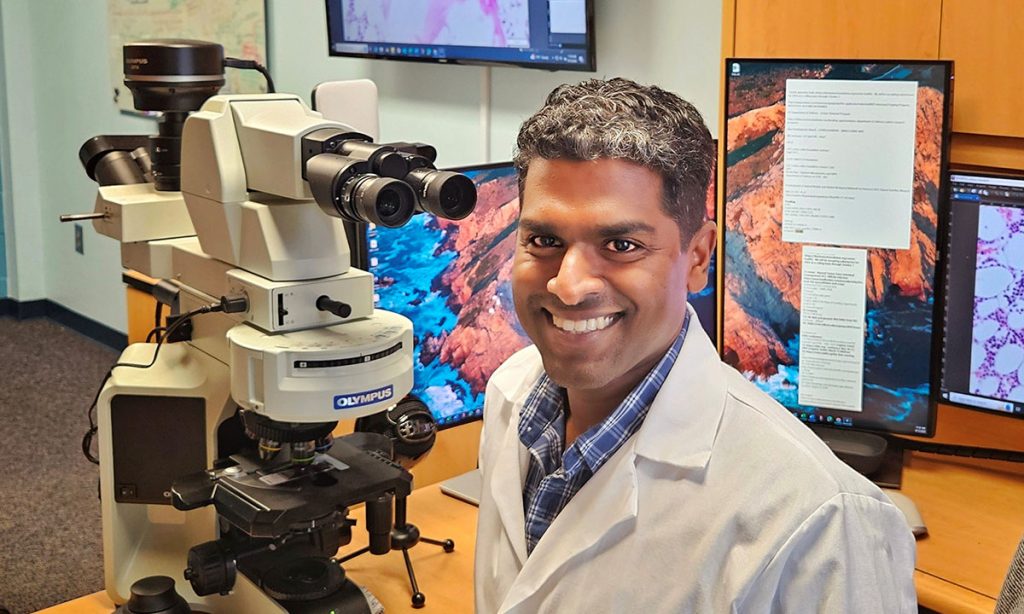
Shaan is a veterinary pathologist and microbiome researcher. He is originally from the Malabar Coast of Kerala, India. After completing his veterinary medicine training at Kerala Agricultural University and a master’s in veterinary pathology at the Indian Veterinary Research Institute, he moved to the United States for higher studies. He completed his PhD and anatomic pathology residency at the University of Connecticut, then served as an assistant professor at Iowa State University for five years before joining Auburn University as an associate professor. In his spare time, he enjoys fishing, kayaking, writing, and drawing—though he especially loves walking with his son, Mr. Togo the Husky, and playing hide-and-seek with his daughter, Ms. Mango the brown tabby cat.