
Why a Crate Matters: How We Safely Transport Raptors to Your Community
When our ambassador birds travel throughout our community, and communities all throughout Alabama and Georgia, their journey begins the same way: with a secure, safe, and familiar travel crate. To the public, crates may seem simple, but for a trained ambassador bird, they are an essential part of keeping them calm, safe, and healthy. Let’s talk about why these travel crates matter and how they support both welfare and exciting public programs.
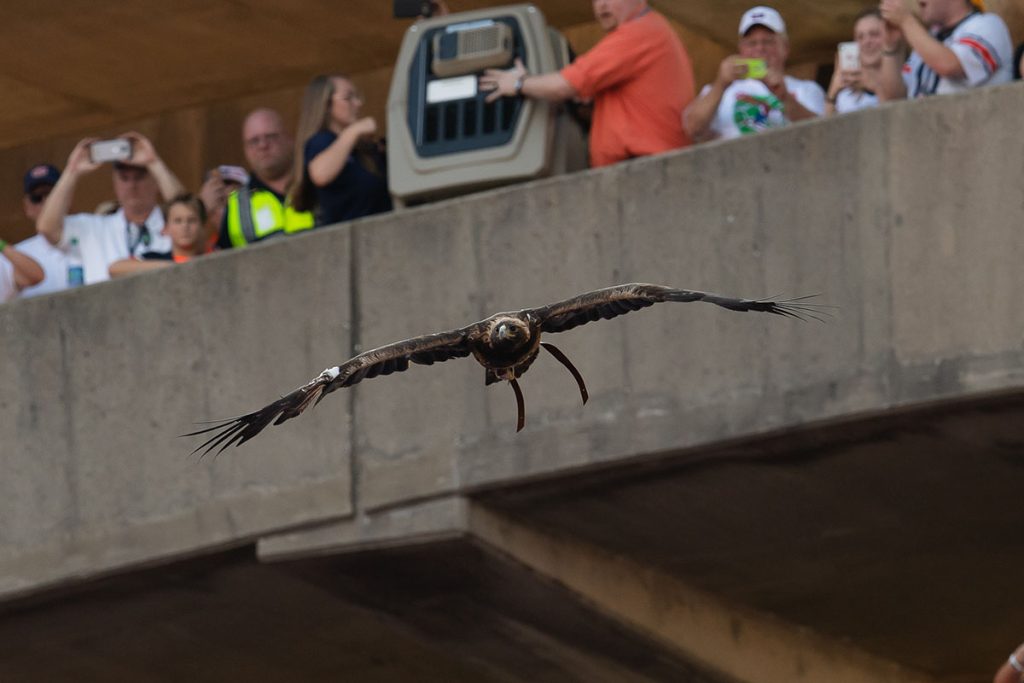
Safe transportation of raptor ambassadors begins with reducing risks. Raptors have powerful wings and sharp talons. These characteristics can make vehicle travel dangerous without the proper crates. A well-designed crate prevents slipping, flapping injuries, collisions, or sudden escapes when travelling in a vehicle. It protects them from unpredictable or uncontrollable environmental factors like dogs, large crowds, or loud and fast-moving stimuli during transport.
Crates also serve as a controlled visual environment. For some of our travel crates, you may notice that there may be some coverings built into the crate or a blanket covering the crate when transporting. Intentionally dim crates lower simulation and helps with keeping birds calm and safe when traveling. For many species, including owls, hawks, and falcons, reduced visual input can significantly decrease stress when traveling.
Equally important is predictability. Raptors love routines, and when a crate is a part of normal training, it becomes a stable and familiar place. Many of our ambassadors voluntarily will walk or hop into their crates because they associate them with comfort, consistency, and reinforcement! This behavioral foundation keeps their stress level low during transport but also right before programs!
When an ambassador raptor arrives at a program feeling safe and calm, everything that follows goes more smoothly. They are more likely to stand comfortably on the glove, demonstrate natural behaviors and overall enjoy programs. We love when birds show common signs of comfort on our programs because we can interpret to the public what a calm bird looks like. Some of our favorite behaviors to talk about are rousing, the act of shaking out all their feathers and realigning them, and when they tuck a foot.
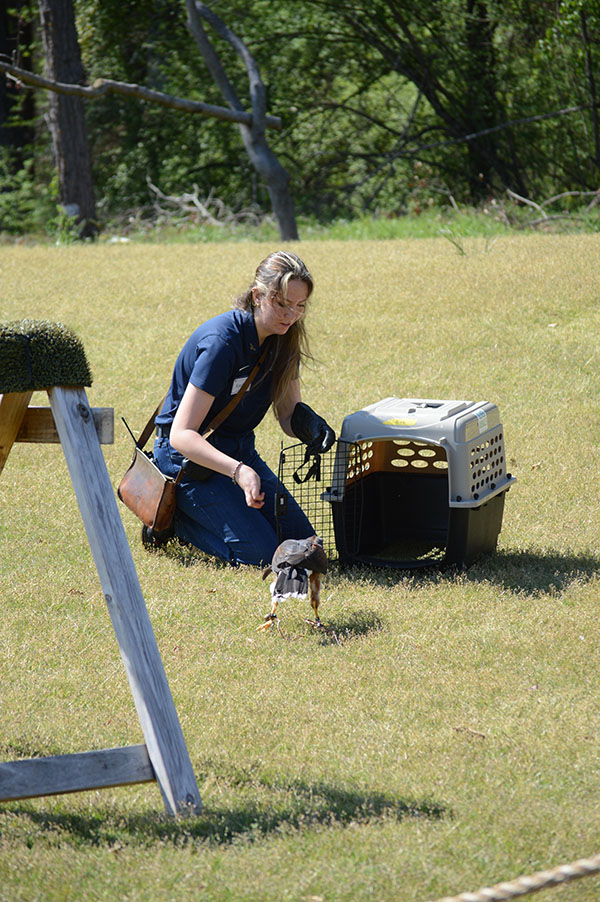
Crate training also helps with long-term behavioral health. Like mentioned earlier, raptors love routine and predictability. When we work on crating behaviors frequently, this will help with confidence building with that bird through use of positive reinforcement training, and relationship building with trainers. Over time, these consistent, low‑stress experiences contribute to ambassadors that are confident, and comfortable in their roles.
Our raptors travel thousands of miles each year, and their crates go everywhere with them!
Schools, Campus events, and Libraries:
Crates allow trainers to move birds quietly and safely through parking lots, hallways, gyms, and classrooms. They also give the bird a private resting space before and after a program.
Veterinary Visits:
Routine exams and emergency care require safe transport. A calm, crate‑trained bird is easier to assess, safer to handle, and less likely to experience extreme stress during medical procedures.
Emergency Evacuations:
Crate training becomes lifesaving in severe weather, or unexpected weather events. Birds who readily load into crates can be evacuated quickly and safely.
Whether the trip is across campus or across the state, crates ensure every ambassador travels with safety and comfort.
Every time we prepare one of our birds for travel, we prioritize its welfare, comfort, and safety. The next time you see one of our ambassadors at your community event, know that their safe and thoughtful journey began with one small but mighty tool: the crate that protects them every step of the way.