
Year-round threat: 2026 Pet Parasite Forecast shows rising tick risk
Auburn University parasitologist Dr. Kathryn Reif is well acquainted with ticks and the many misconceptions that can leave pets and their humans unprotected from a growing, year-round threat.
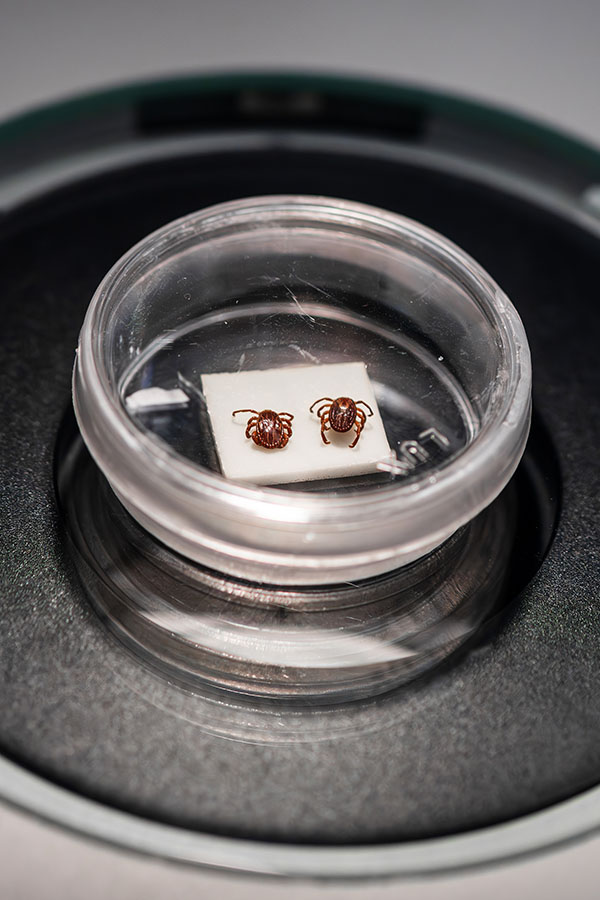
For starters, ticks don’t disappear in the winter. Many species remain active as long as temperatures are above freezing. They’re also just as likely to show up in backyards as in forests or tall grass.
While it may be tough to predict when and where ticks may appear, the Companion Animal Parasite Council (CAPC) has developed the Pet Parasite Forecasts to help veterinarians and pet owners assess the local disease risk.
Big data, big insight
The annual forecasts are developed by parasitologists, clinicians, data modelers and other experts in the realm of one health who strive to increase awareness of the threat parasites present to pets and their families.
The team builds the forecasts using veterinary diagnostic data, including over 10 million diagnostic test results annually, a historical diagnostic database reaching back to 2012 and environmental variables like temperature and precipitation. Together, these help project where pets will be at the highest risk for vector-borne diseases transmitted by pests such as ticks, fleas and mosquitos.
Those projections are displayed using interactive heat maps that show the prevalence of diseases like canine Lyme, ehrlichiosis, anaplasmosis and heartworm disease. The forecasts drill down to the county level and are around 94% accurate year over year. The maps equip veterinarians with a hyper-local, reliable tool that can help drive education and prevention efforts and evaluate whether preventative measures are working.
Reif, the College of Veterinary Medicine’s Bailey-Goodwin Endowed associate professor of parasitology and CAPC board member, was the lead author of the 2026 forecasts. Her key takeaway from this year’s results?
“The trend is that ticks keep spreading, and that means the risk is there,” Reif said. “Our recommendation is that every pet should receive annual parasite testing and year-round protection against ticks and other parasites.”
The forecasts not only serve as a guide for pets, but they also shed light on the risk for humans.
“Our dogs, especially, are really wonderful sentinels for our own risk because we share a lot of the same risk factors as our pets,” Reif said. “If the family dog is testing positive, that means they’re either living in or visiting a place with ticks — infected ticks — which typically means that pet owner is also living or visiting places with infected ticks.”
Risk on the rise
According to Reif, a complex web of factors has created a “perfect storm” for ticks to spread. A warming climate, reforestation and ever-changing interactions between animals and humans allow ticks and other pathogen-transmitting arthropods to creep outside their usual areas.
Lone star and blacklegged ticks are spreading the most, leading to higher risks for ehrlichiosis and Lyme disease. The Asian Longhorned Tick, an invasive tick that is known to transmit an emerging cattle disease — bovine theileriosis — is also on the move and made its way to Alabama this April.

While it hasn’t made it to the U.S., the New World screwworm is another risk that is steadily moving north from South America and parts of the Caribbean through every country in Central America and Mexico. The parasitic fly lays its eggs in open wounds, which Reif said can be as small as a bug bite.
“Making sure our pets aren’t infested with other things also helps reduce the risk that they would potentially be infested by these flies,” Reif said.
Protecting our pets and ourselves
While ticks have traditionally been thought of as summertime bugs living in heavily wooded or grassy areas, the risk of a tick bite is much more widespread.
“The natural host of ticks are our wildlife species — deer, coyotes, bunnies, squirrels, chipmunks,” Reif said. “If we see these creatures traveling through our yards, that means those areas aren’t necessarily immune from ticks.”
Some ticks are drawn to warmer weather, but others prefer cooler temperatures. That includes the blacklegged tick, which is known for transmitting Lyme disease. This means tick season is an “all-year phenomenon.”
These ever-present risk factors are why CAPC’s motto is “Every Pet Tested, Every Pet Protected.” To keep pets safe from parasite and vector-borne disease, Reif advises pet owners to get their animals tested annually and to regularly treat pets for ticks, fleas and other common parasites.
“It just takes one tick bite to spread disease,” Reif said. “We really need to be protecting our pets on a year-round basis, not just during the times of year we anecdotally think are the highest risk.”
The CAPC has online resources for both veterinarians and pet owners to monitor their local risks and find the right prevention treatments for both cats and dogs. To explore the 2026 Pet Parasite Forecasts and up-to-date prevalence maps, visit capcvet.org.